By Inbound Content on November 7th, 2026 in Criminal Defense
Mental illness plays a role in many criminal cases. 80% of Harris County Jail inmates report a mental health symptom. Texas law recognizes this. If you qualify, a mental health defense can pause your case, move it to a treatment court, reduce the charge, or lead to an acquittal.
Texas law gives two formal routes. Insanity applies if a severe mental illness meant you did not know your conduct was wrong when it happened. Incompetency applies if you cannot understand the case or work with your lawyer now. Mental health evidence can also rebut intent, support a mental health personal bond, or lower a sentence.
Key takeaways
- Most people with a mental illness do not meet the insanity test. However, mental health can still help in other ways: it can disprove intent, support a referral to a treatment court, or reduce a sentence.
- The first few days in jail create evidence. A Texas jail must flag signs of mental illness to a magistrate within 12 hours. That screening report can support a mental health personal bond.
- An insanity verdict can lead to court-ordered treatment for up to the maximum sentence for the offense. A finding that you are unfit for trial can mean months in jail waiting for a state hospital bed.
- Your lawyer must file notice of an insanity defense at least 20 days before trial. Late notice can block the expert evidence.
- What you say in a court-ordered competency exam cannot be used to prove guilt at trial, and time spent in restoration counts toward any later sentence.
About Houston criminal defense lawyer Nathaniel Pitoniak
Nathaniel Pitoniak has worked both sides of mental health cases. He served as a Felony Prosecutor and Chief Prosecutor in the Harris County District Attorney’s Office before opening his own practice. He has worked in criminal defense in Houston for more than 17 years.
Nathaniel earned his law degree from the University of Houston Law Center in 2007 after graduating with honors from the University of Texas at Austin, and he practices criminal defense only.
He is a member of the Harris County Criminal Lawyers Association and was selected to Super Lawyers Rising Stars from 2020 to 2022. He holds an Excellent rating on Avvo, an A+ rating from the Better Business Bureau, and a 5-star rating on Google based on 185 reviews.
His defense record includes more than 30 jury trials and hundreds of dismissals in felony and misdemeanor cases, including a Not Guilty verdict on a felony carrying a 25- to 99-year sentence. On mental health cases, families describe similar results. One client with a mental illness faced felony and misdemeanor charges, including assault on a police officer. Nathaniel had every charge dropped and got support for his mental health. Another family credits him with “the best possible result” for a brother charged with a serious felony brought on by mental health issues. A third describes results “beyond what we had hoped for” in a case involving mental illness and autism.
As a prosecutor, Nathaniel saw how the District Attorney’s Office decides which mental health cases to dismiss, send to mental health court, or take to trial. He uses that knowledge to tie medical records and an independent expert evaluation to the moment of the offense. He works closely with families, who are often the client’s strongest advocates. He has also negotiated pretrial intervention agreements that let clients protect their immigration status and professional licenses.
If mental illness played a role in your loved one’s arrest, speak to Nathaniel before anyone raises it with police, jail staff, or prosecutors. Call 832-315-6283, 24 hours a day, 7 days a week.
What is a mental health defense in Texas?
A mental health issue can affect a case in two main ways:
- It can mean you are not fit to stand trial yet (incompetency), or
- You are not legally responsible for the act (insanity defense)
If you’re considering an insanity defense in Texas, the most fundamental question is:
At the time of the offense, did the alleged offender know the conduct was wrong as a result of severe mental disease or defect?
Mental health can affect a case at several stages:
|
OPTION |
THE QUESTION |
POSSIBLE RESULT |
| Insanity (Penal Code § 8.01) | Did a severe mental disease stop you from knowing your conduct was wrong? | Not guilty by reason of insanity. |
| Incompetency (CCP Chapter 46B) | Can you understand the case and work with your lawyer now? | Case paused for treatment. |
| Mental state evidence | Did your condition stop you from forming the required intent? | Acquittal or a lesser offense. |
| Mental health court (Gov’t Code Chapter 125) | Is treatment a better fit than jail? | Possible dismissal or probation. |
| Sentencing mitigation | Should your condition reduce the punishment? | Probation or a shorter sentence. |
Some cases use more than one of these options.
Which mental health conditions can support a defense in Texas?
Here is how common conditions tend to fit the options above:
|
CONDITION |
OPTIONS THAT MAY APPLY |
| Schizophrenia and other psychotic disorders | Insanity (if symptoms were severe at the time), competency, intent evidence, mental health court, a lighter sentence. |
| Bipolar disorder | Competency, intent evidence, mental health court, a lighter sentence; insanity only if psychotic symptoms were severe. |
| Major depression | Mental health court, treatment-focused probation, a lighter sentence. |
| PTSD | Intent evidence in some cases, veterans treatment court for veterans and service members, a lighter sentence. |
| Anxiety disorders | Treatment conditions on bond or probation, a lighter sentence. |
| ADHD | Rarely a defense, but it can support a lighter sentence. |
| Autism spectrum disorder | Intent evidence in some cases, competency, a lighter sentence. |
| Intellectual disability | Competency, intent evidence, mental health court, a mental health personal bond; it also bars the death penalty (Atkins v. Virginia, 2002). |
| Traumatic brain injury | Competency, intent evidence, sometimes insanity, veterans treatment court for veterans and service members. |
| Dementia | Competency, sometimes insanity. |
| Substance use disorder | Drug court, treatment-focused probation, a lighter sentence; voluntary intoxication is not a defense (Penal Code § 8.04). |
Many people have more than one condition. An expert evaluation is the best way to find out which options fit your case.
How common is mental illness in criminal cases?
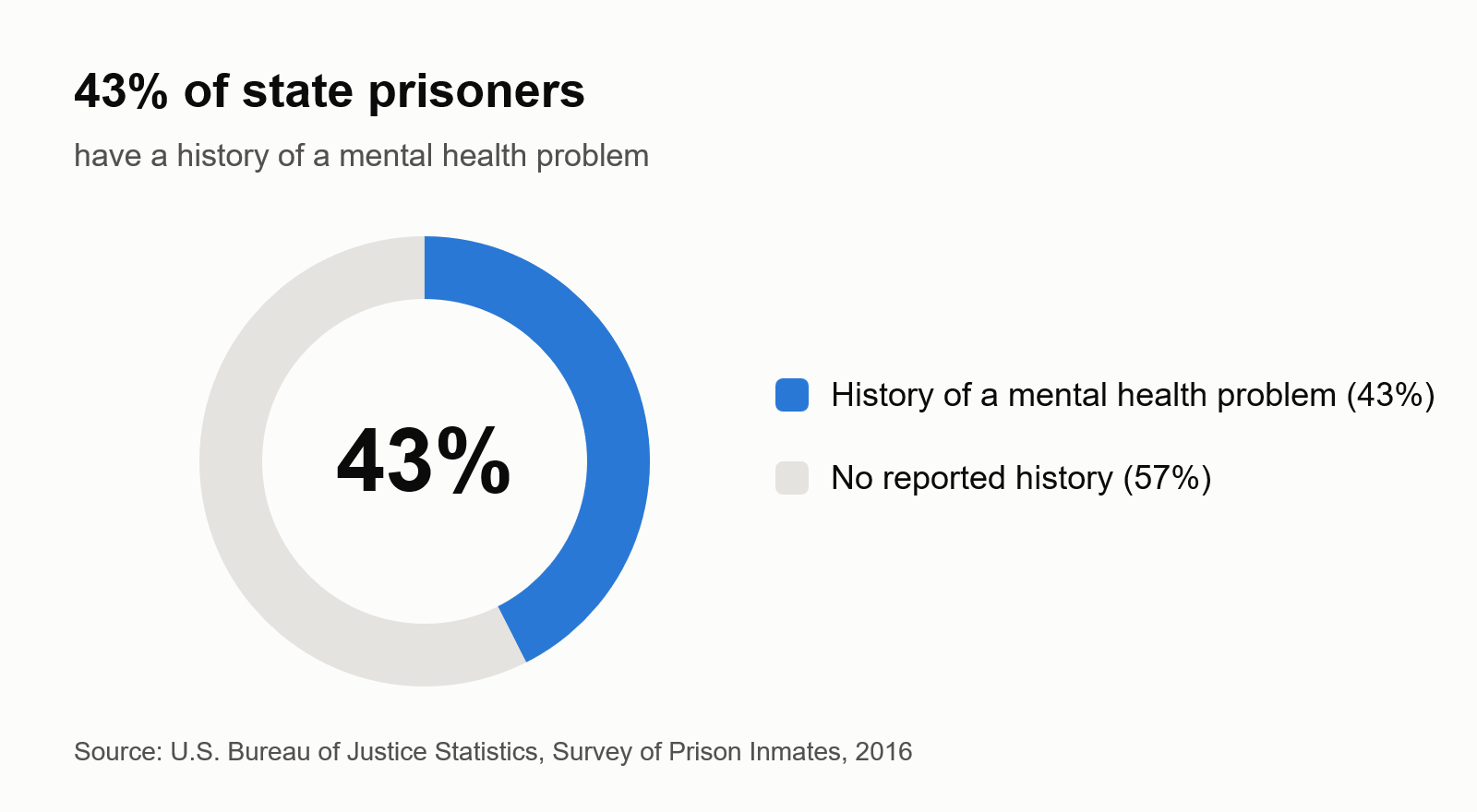
43% of state prisoners reported a history of mental health problems in BJS’s most recent prison survey.
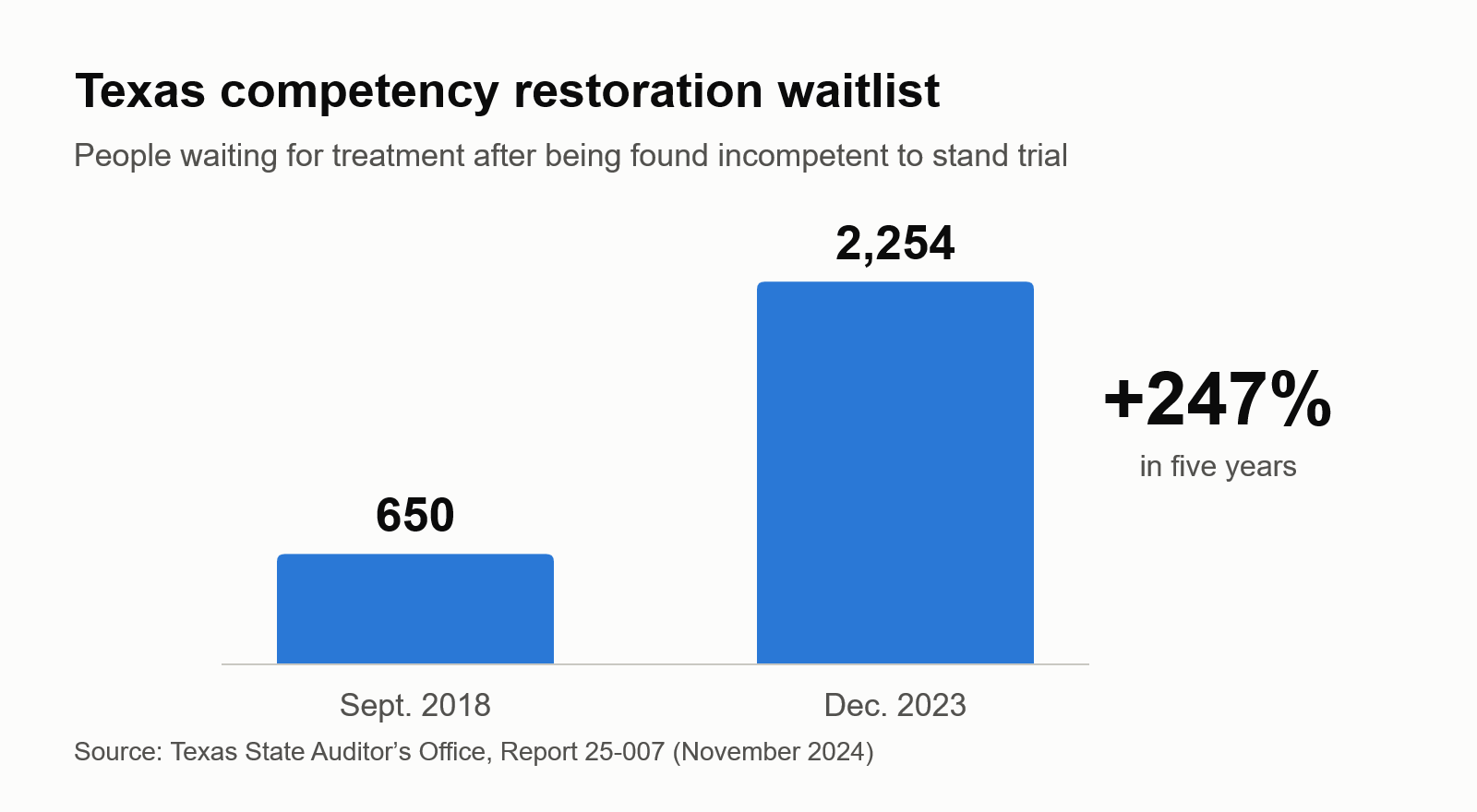
The competency restoration waitlist (the process of treating a defendant found incompetent to stand trial) grew from 650 to 2,254 between September 2018 and December 2023, a 247% increase.
What does it mean to be incompetent to stand trial?
Texas law calls a defendant who cannot take part in their own case ‘incompetent.’ An incompetency finding pauses the case until treatment restores competency.
Under the law, you are competent if you can:
- The defendant demonstrates a sufficient ability to consult with their attorney with a reasonable level of understanding, and
- Rationally and factually, the defendant understands the proceedings against them.
You are presumed competent unless the evidence shows otherwise. Incompetency is typically proven through evaluations by mental health experts. The court appoints experts. Your lawyer can also hire an independent expert. Typically, both are called upon to provide a full picture of the defendant’s level of competency.
Key protections:
- You can have an expert of your own choosing examine you.
- What you say in a competency exam cannot be used against you at trial.
- Time spent in restoration counts toward any later sentence.
These rules protect you when competency is raised. An incompetency finding pauses the case. It does not end it unless the charges are dismissed.
The defendant may be ordered to seek treatment at:
- An inpatient or residential facility,
- A jail-based restoration program, or
- An outpatient competency restoration program (a program to treat a defendant who has been found incompetent to stand trial).
The court picks the setting based on the charge and your treatment needs.
How long does competency restoration take?
The period of competency restoration depends on whether the charge is a felony or misdemeanor:
|
CHARGE |
FIRST PERIOD |
EXTENSION |
OVERALL LIMIT |
| Misdemeanor | Up to 60 days | One 60-day extension | Maximum jail term for the offense |
| Felony | Up to 120 days | One 60-day extension | Maximum prison term for the offense |
At the Law Office of Nathaniel Pitoniak, we have successfully implemented mental health defenses for clients facing misdemeanor and serious felony charges. Call us today to find out how.
How does the insanity defense work in Texas?
Criminal law, by default, assumes that individuals are sane, aware, and capable of differentiating between legal and illegal behavior.
Under Penal Code § 8.01, you are not guilty if a severe mental disease or defect meant you did not know your conduct was wrong. In such cases, a defendant can be found not guilty by reason of insanity.
How do courts test insanity in Texas?
To determine insanity, Texas uses a narrow version of the M’Naghten Test. This test asks whether the defendant was able to understand whether their actions were right or wrong at the time the act was committed.
Under the M’Naghten Test, the defendant can successfully call upon the insanity defense if they can prove that mental illness prevented them from understanding that their actions were criminal. A preponderance of evidence must support this. That means it’s more likely than not that the claim is true.
The process for raising the insanity defense in Texas follows CCP Chapter 46C:
- Notice. Your lawyer must file notice at least 20 days before trial. Late notice can block the evidence.
- Examination. The court can appoint experts to examine you.
- Trial. The State must prove the act beyond a reasonable doubt. You must prove insanity by a preponderance of the evidence.
- Verdict. A not-guilty-by-reason-of-insanity finding counts as an acquittal.
Strong expert evidence about your mental state at the time of the offense usually decides these cases.
What happens after an insanity verdict?
After an insanity verdict, what happens next depends on the nature of the offense you were accused of:
|
TYPE OF CONDUCT |
WHAT HAPPENS NEXT |
| Caused serious injury, put someone in danger of it, or threatened it with a deadly weapon. | The court can order inpatient or outpatient treatment, for no longer than the maximum sentence for the offense. |
| No dangerous conduct | The court can start civil commitment proceedings or release you. |
Weigh these outcomes before choosing this defense.
Can mental illness disprove intent without an insanity plea?
Yes, in some cases. Texas does not recognize ‘diminished capacity’ as a defense. But in Ruffin v. State (2008), the Court of Criminal Appeals held that evidence of a mental disease is admissible when it directly rebuts the mental state the charge requires.
In Ruffin, the defendant fired at police officers but believed they were other people. His delusions were relevant to whether he knew he was shooting at officers.
A general diagnosis is not enough. The evidence must speak to your mind at the moment of the offense.
What mental health programs are available in Harris County?
Harris County offers several programs that can lead to treatment instead of jail.
|
PROGRAM |
HOW IT WORKS |
| Jail screening (Art. 16.22) | The Harris County Jail (1200 Baker St., Houston) must notify a magistrate within 12 hours of signs of mental illness. The assessment is due within 96 hours. |
| Mental health personal bond (Art. 17.032) | For nonviolent charges, a magistrate must grant a personal bond with treatment conditions unless there is good cause not to do so. |
| Felony Mental Health Court (Gov’t Code Ch. 125) | Voluntary, with a lawyer throughout. Completion can lead to dismissal. |
| Veterans Treatment Court (Gov’t Code Ch. 124) | For veterans and service members, especially those whose service-related brain injury, mental illness, PTSD, or military sexual trauma affected the conduct charged. |
| Judge Ed Emmett Mental Health Diversion Center | Some low-level, nonviolent misdemeanor cases go to treatment instead of jail. |
Most hearings take place at the Harris County Criminal Justice Center (1201 Franklin St., Houston). The Harris Center for Mental Health and IDD conducts many of the assessments.
How does Nathaniel Pitoniak build a mental health defense?
Nathaniel’s approach starts long before any court date:
- Collect the records. He gathers prescriptions, hospital and school records, and the jail screening report.
- Hire an independent expert. A forensic psychiatrist or psychologist evaluates your mental state then and now.
- Choose the right path. Each option carries different risks.
- Negotiate with prosecutors. Nathaniel knows how the Harris County District Attorney’s Office weighs mental health.
- Prepare for trial. He prepares every case as if it will go before a jury.
This approach protects your options at every stage of the case.
Successful result: Aggravated sexual assault charge no-billed by grand jury
A 20-year-old client with a lifelong history of mental health issues faced five years to life in prison:
- He was charged with aggravated sexual assault of a minor in Harris County.
- Nathaniel took over the case, worked closely with the client’s mother as his caregiver, and prepared the defense for the Harris County grand jury.
- The grand jury returned a no bill, meaning it declined to indict. The case ended without a trial.
From the client’s mother:
“We had two attorneys prior to Nathaniel, one court-appointed and one paid, and neither worked out. Either his mental health issues were too much to work with, or as his mom, caregiver, and advocate, I was a ‘pain’ for the other attorneys. But not for Nathaniel, he answered all my questions, never hesitated to answer the phone when I called, responded to my text messages quickly, and in a nutshell, understood how hard this was for my son and our family and showed genuine concern and empathy. This was the worst year of my life living this out with my son, and [I] am SO glad I found Nathaniel.”
Read more of Nathaniel’s results for clients.
Testimonials
Here’s what clients have been saying about Nathaniel:
“Truly thankful for everything he’s done”
“My mentally ill brother was facing serious charges, one being assault on a police officer. I had many consultations with other lawyers, but felt instantly at ease after speaking with Nathaniel. He let me know right away that he had a ton of experience working with mentally ill people and that he could help us. Nathaniel was able to get all of my brother’s charges, felonies and misdemeanors, dropped. He also was able to get my brother support for his mental health. My family and I are truly thankful for everything he’s done.”
– M.A.
“Exceeded my expectations”
“My brother was charged with a serious felony brought on by mental health issues. I am not from Houston and did not know who to turn to. Nathaniel Pitoniak exceeded my expectations; he had the experience and work ethic to navigate the system effectively. He worked hard on my brother’s case, cared about him, and got him the best possible result.”
– J.
“Thoughtful advocacy and unwavering support”
“They approached our son’s case with deep understanding, compassion, and dedication, treating him not just as a client, but as a person with dignity and unique needs. Nathaniel and Amanda’s thoughtful advocacy and unwavering support led to a resolution that truly prioritized our son’s well-being.”
– B.C.B.
“The perfect choice”
“Nathaniel never makes you feel rushed, responds quickly, listens attentively, and uses kind compassion when dealing with sensitive issues involving those with mental illness and autism. He is thorough and clever, patient and professional, the perfect choice. The whole family is grateful to have found him; the results he attained were beyond what we had hoped for.”
– A.H.
Read more reviews from past clients. Past results do not guarantee future outcomes.
Related offenses
Mental health often plays a role in these charges:
- Assault, including assault on a public servant. A mental health crisis that ends in a struggle with police can turn a misdemeanor into a felony.
- Aggravated assault. Paranoia or delusions involving a weapon can lead to a serious felony charge, where intent evidence matters.
- Domestic violence. A family member calls 911 for help during a crisis, and police charge assault on a family member.
- Murder. Evidence of insanity and intent carries the most weight where the penalties are highest.
- Sex crimes. Intellectual disability and autism can raise questions about competency and intent.
- DWI. Voluntary intoxication is not a defense, but a mental illness alongside substance use can support treatment conditions or a lighter sentence.
- Misdemeanors such as criminal trespass and disorderly conduct. Low-level, nonviolent cases may qualify for the Judge Ed Emmett Mental Health Diversion Center.
Nathaniel reviews the mental health history in every case, whatever the charge.
FAQs
Will a mental health defense keep my record clean?
It depends on the outcome. A not guilty by reason of insanity verdict is an acquittal, not a conviction. Finishing a mental health court program can lead to a dismissal and the paperwork for an expunction. The arrest record itself stays until a court orders an expunction.
Can I use a diagnosis I received after my arrest?
Yes. A diagnosis made after arrest can still describe a condition you had at the time of the offense. Experts review your history, past symptoms, and jail screening records to connect the two. The key question is your mental state at the time of the alleged offense.
Does a mental health defense apply to DWI charges?
Rarely. Under Texas Penal Code § 8.04, voluntary intoxication is not a defense. However, a mental illness that exists alongside substance use can support treatment conditions, a mental health bond, or a lighter sentence. Your lawyer can raise it during plea talks and at sentencing.
Can a family member hire a lawyer for someone who refuses help?
Yes. A parent, spouse, or sibling can contact a lawyer and pay for services. The lawyer still represents the accused person, who makes the final decisions. If that person cannot communicate rationally with the lawyer, that fact alone can raise a question of competency.
Talk to a former prosecutor about your mental health defense
A mental health defense has strict deadlines and evidence rules. Nathaniel has argued these cases from both sides of the courtroom. Call 832-315-6283, 24/7, to talk through your options.
Legal references
- Insanity and Intoxication Defenses (Texas Penal Code, Chapter 8)
- Incompetency to Stand Trial (Texas Code of Criminal Procedure, Chapter 46B)
- Insanity Defense Procedure (Texas Code of Criminal Procedure, Chapter 46C)
- Jail Mental Health Screening (Texas Code of Criminal Procedure, Article 16.22)
- Mental Health Personal Bond (Texas Code of Criminal Procedure, Article 17.032)
- Mental Health Court Programs (Texas Government Code, Chapter 125)
- Mental Illness Evidence to Disprove Intent (Ruffin v. State, 270 S.W.3d 586, Tex. Crim. App. 2008)
- Death Penalty Barred for Defendants with Intellectual Disability (Atkins v. Virginia, 536 U.S. 304, 2002)
- Mental Health Fast Facts (Harris County District Attorney’s Office)
- Indicators of Mental Health Problems Reported by Prisoners (U.S. Bureau of Justice Statistics, Survey of Prison Inmates, 2016)
- A Review of Competency Restoration Services for Inmates in County Jails (Texas State Auditor’s Office, Report 25-007, November 2024)
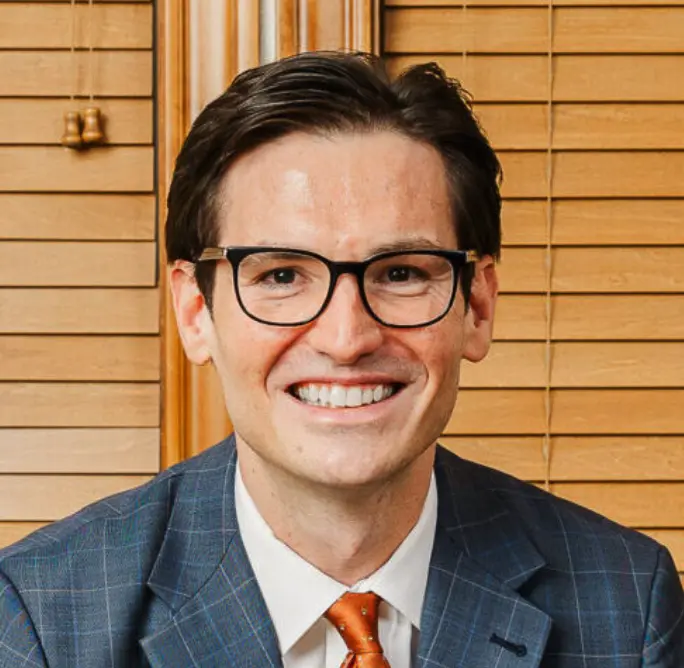
Verified By: Nathaniel Pitoniak, Criminal Defense Lawyer & Former Prosecutor
Last Modified: August 5, 2026
Nathaniel Pitoniak is an experienced criminal defense attorney and former Harris County prosecutor based in Houston, Texas. With nearly two decades of legal practice, he has tried over thirty jury trials, ranging from misdemeanors to serious felonies, and dedicated his career to fighting for the rights of individuals facing criminal charges.
Experience
- Proven Results: Has successfully tried more than 30 felony and misdemeanor jury trials and obtained hundreds of case dismissals. Secured notable outcomes, including a Not Guilty verdict in a serious felony trial carrying up to 99 years in prison, and substantial charge reductions in complex homicide matters.
- Prosecutorial Perspective: Served as a former Assistant District Attorney, felony prosecutor, and chief prosecutor in the Harris County District Attorney’s Office, gaining firsthand insight into how cases are built, evidence is evaluated, and risk is assessed by the state.
- Client-Centered Resolution: Skilled in positioning cases for trial while actively seeking pre-trial intervention agreements and charge dismissals to help clients avoid conviction, preserve professional licenses, and protect immigration status.
Education & Academic Leadership
- Education: Earned his bachelor’s degree from the University of Texas and his Juris Doctor (J.D.) from The University of Houston Law Center.
- Academic & Professional Foundation: Trained extensively at the University of Houston Law Center and honed his trial advocacy during his tenure at the Harris County District Attorney’s Office.
Credentials & Recognition
- Courtroom Credibility: Earned praise from opposing prosecutors for trial advocacy, as well as high acclaim from clients for steady, honest, and persuasive representation in high-stakes criminal matters.
- Broad Legal Expertise: Represents clients facing a wide range of state and federal charges, including drug offenses, violent crimes, domestic violence, sex crimes, and white-collar offenses.
Connect with Nathaniel: Bio | Firm Office: (346) 589-7074